2026-09-01
Does my child need speech therapy, or more time?
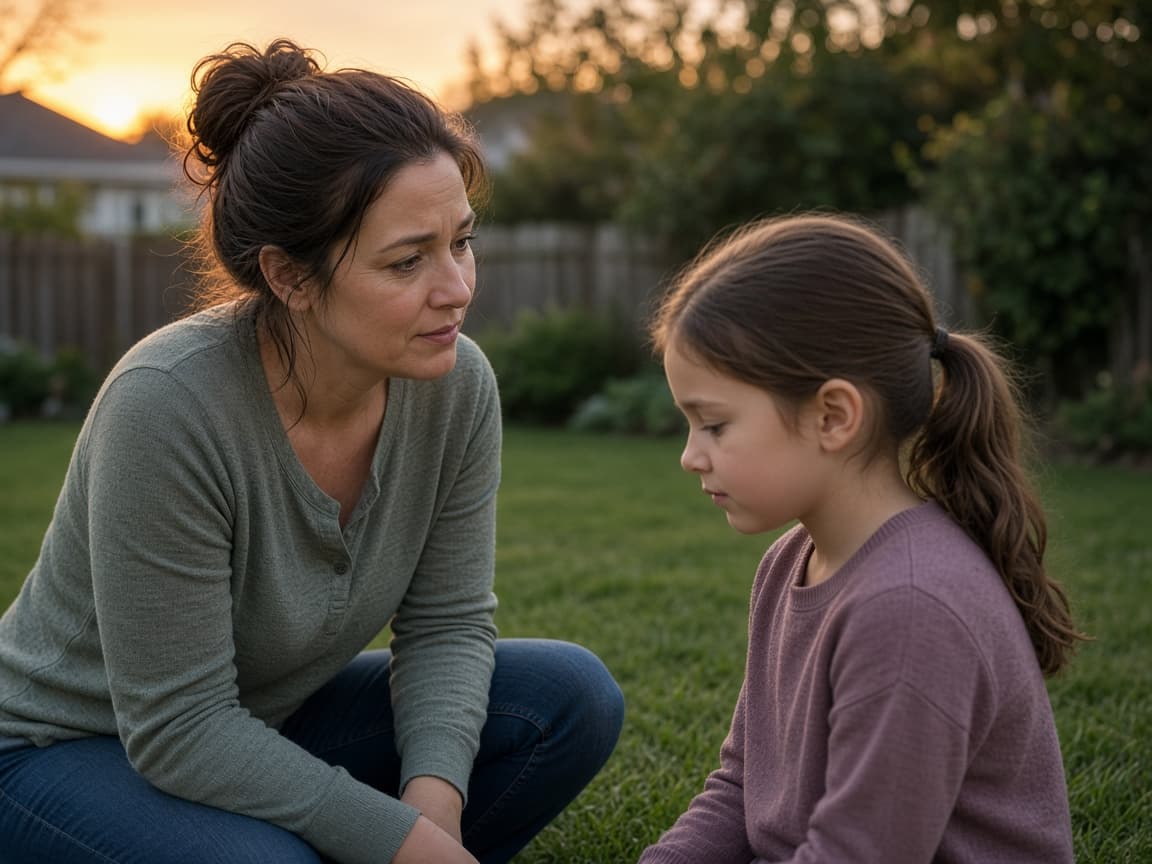
The most common advice families hear is to wait. Sometimes that is right. A new sound, a growth spurt, or a quieter month at home can look like a delay and then settle. Often, though, wait-and-see is how a preschool language gap becomes a kindergarten problem. The useful question is not whether your child will talk someday. It is whether the next six months are likely to close the gap without help.
Summit Speech Therapy evaluates speech, language, feeding, and oral function for children in Bountiful, Layton, and Murray, and by telehealth anywhere in Utah. A free phone consultation with a speech-language pathologist is the first step. There is no hospital wait list and no online self-scheduling. Phone hours are Monday through Friday, 8:30am to 5:30pm, and appointments can run from 7am to 8pm.
Start with three everyday questions
You do not need a test kit to notice whether communication is keeping up with your child's life. Ask these three questions before you decide that more time is the plan.
- Can unfamiliar adults understand your child without you translating?
- Can your child follow a two-step direction without watching your face for clues?
- Has anything new appeared in the last three months, or has growth stalled?
If two of those answers worry you, a consult is a better next step than another season of hoping. One worried answer can still be worth a call when the worry is feeding, suspected childhood apraxia, or a child who understands far more than they can say.
What wait-and-see gets wrong
Speech and language are not one skill. A child can have a large vocabulary and still be hard to understand. Another child can say sounds clearly and still not follow classroom directions, answer questions, or join play. Waiting because one piece looks fine is how the other piece gets missed.
Age charts are averages, not permission slips. A two-year-old with a handful of words and strong gestures is a different picture from a three-year-old whose sentences have not grown since spring. The second child has already had the time people usually recommend. More of the same is not a new plan.
Preschool makes the gap louder. At home, parents fill in words, shorten directions, and know the story behind a mumbled sentence. A teacher managing a room cannot do that for every child. If unfamiliar listeners keep asking you to repeat what your child said, that is information. Familiar people are a poor test of intelligibility.
Growth that has stalled matters more than a single missed milestone. Children in a healthy language burst add words, combine them, and try new sounds even when the attempts are messy. A child who has used the same twenty words, the same errors, and the same frustrated point for months is not in a burst. That pattern deserves a look now, not at the next well-child visit if nothing changes.
Signs that deserve an evaluation, not another semester
Bring these observations to the consult. You do not need to diagnose them. You need to describe what you see.
- Speech that strangers understand less than half the time after age three
- Few words, or words that do not turn into short sentences as the child gets older
- Directions that only work when you point, repeat, or simplify to one step
- Sounds that come out differently every time the child tries the same word
- Frustration, hitting, or quitting when talking does not work
- Feeding that is painful, extremely limited, or still dependent on a bottle or pouch past the age you expected
- A lisp, open-mouth posture, or tongue that cannot lift, especially if a dentist has already mentioned it
Childhood apraxia of speech is one reason generic practice is the wrong prescription. The child often understands language and still cannot reliably sequence sounds. Inconsistent words, groping, and vowel errors that do not match a simple substitution are reasons to evaluate, not to assign more worksheets. Articulation therapy and phonological therapy are different plans too. A lisp is usually one sound. A pattern that deletes endings or simplifies many words is a system. The evaluation is how those get separated.
Early intervention is for children under three, when frequency matters and hospital or school programs often ration visits. Preschool language therapy is the work of words, sentences, and understanding while a child still learns through play. Neither service requires you to prove a diagnosis before you call.
What the free consult actually decides
The front office takes your details at (385) 275-0492. A speech-language pathologist then talks with you. That call is not therapy and it does not create a patient relationship. It answers whether the next visit should be a screening, a comprehensive evaluation, or a plan to watch specific skills for a defined period.
A comprehensive evaluation uses diagnostic tools for the question in front of you: speech sounds, language including early reading when that is relevant, fluency, cognition, or swallowing and feeding. Therapy starts from that written plan. If you already have an outside report from the last six months, bring it. Testing can sometimes focus on what is still unknown instead of repeating everything.
Say which clinic fits the week. Bountiful, at 415 S Medical Drive #D101, and Layton, at 1410 Hill Field Road Suite #3, are both in Davis County. Murray, at 975 E Woodoak Lane Suite #220, is the Salt Lake County clinic. The same phone number reaches all three. Telehealth is available anywhere in Utah when the goal can be treated well on screen. Feeding exams, some swallow visits, and first evaluations that need us to see structure still belong in the room.
How to use the months you do decide to wait
If the consult says a short period of watching is reasonable, make the watch specific. Pick two skills, such as new words per week or whether a sibling can understand a request, and look again in six to eight weeks. Open-ended waiting has no end date. A dated check does.
Talk during routines you already have. Name clothes and weather in the morning. Offer choices that need more than yes or no. At pickup, skip the broad question about the whole day and ask who they played with or what they built. Shared reading helps when you pause and let the child tell what happens next. These habits support language. They are not a substitute for evaluation when the three questions above are already unanswered.
Teachers see a different room than you do. Ask whether your child responds in a group, how they communicate in play, and whether multi-step directions fall apart. Share what works at home, including extra wait time or one direction at a time. Consistent information across home and school is more useful than a vague sense that they will grow out of it.
A clear next step
More time is the right recommendation when skills are moving and the child is understood by new people. It is the wrong recommendation when intelligibility, understanding, feeding, or the variety of words has stalled. Summit sees infants through adults, including children whose only question is whether to wait. Call (385) 275-0492 during phone hours, or request the free consult online, and a clinician will tell you whether the first visit should be in Bountiful, Layton, Murray, or on video.