2026-08-18
Tongue tie release without therapy: why function does not always follow
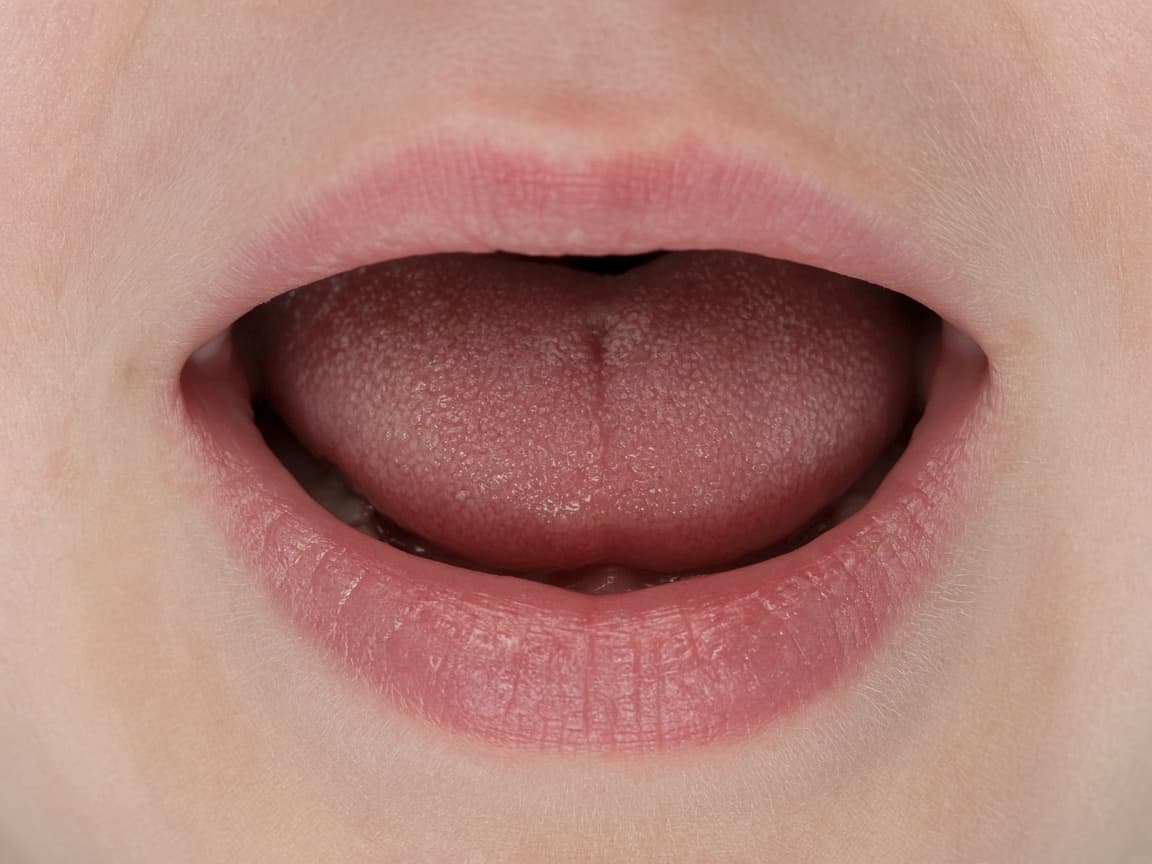
A release changes tissue. It does not automatically teach a tongue to rest on the palate, swallow without thrusting, or make a clean /s/. Families come to Summit after a laser visit with the same lisp, the same open-mouth posture, and a scar that is already tightening. Pre-op practice and post-op myofunctional work are how a frenectomy becomes a functional change.
Tongue tie, or ankyloglossia, is not diagnosed from a photo of a frenum. It is diagnosed from function: lift, reach, speech, feeding, and swallow. Some ties need a release by a dentist, ENT, or surgeon. Summit does not perform frenectomies or frenuloplasties. We evaluate function, prepare the tongue, and rehabilitate after a qualified provider releases the tissue.
Why the procedure and the therapy are different jobs
Restricted tissue can limit how far the tongue lifts and how easily it spreads into the palate. Cutting or lasering that restriction removes a mechanical limit. It does not install a new resting posture. Muscles that have thrust, braced against the teeth, or stayed low in the mouth will keep doing that until someone retrains them.
That is why people say the surgery did not work. The tissue may have been released. The swallow, the lip seal, and the speech sound never got a plan. A clip without therapy is a common way to spend money and keep the same symptoms.
The reverse mistake happens too. Not every tight-looking frenum needs a release. If lift, feeding, and speech are already functional, more surgery is not the treatment. The evaluation is supposed to say which situation you are in before anyone schedules a laser.
What function looks like before anyone books a release
Ask what the tongue can do, not only what the frenum looks like. These are the observations we want on a consult.
- The tongue tip stays heart-shaped or cannot lift to the palate
- Nursing or bottle feeding includes clicking, leaking, or pain
- Sounds that need tongue elevation, such as t, d, n, l, r, or s, stay imprecise
- The jaw thrusts forward to make up for a short reach
- The mouth hangs open at rest, or the swallow pushes against the front teeth
- A dentist or orthodontist has already named an open bite, relapse, or tongue thrust
Infants, school-age children, and adults can all have a functional tie. Infants show it in feeding. Children show it in speech clarity and oral rest. Adults sometimes show it as speech fatigue, a stubborn lisp, or a bite that will not hold after orthodontics. Age changes the therapy tasks. It does not change the rule that appearance alone is a weak diagnosis.
What to do before the release
If a release is already on the calendar anywhere along the Wasatch Front, ask who is doing the therapy, not only who is holding the laser. Pre-op work, sometimes called activation, teaches movements the tongue could not practice well while it was restricted. Families who start that work before the procedure usually know the exercises, the wound-care expectations, and the signs that healing is tightening.
Bring the releasing provider's notes to the consult when you have them. Also bring dental letters or photos if an open bite or relapse is part of the story. We coordinate with that provider. We do not replace them, and we do not move teeth. Orthodontics can close a bite. The tongue can open it again if the swallow pattern never changes.
Mouth breathing belongs in the same conversation when it is present. Muscle training cannot open a blocked nose. If there is snoring, gasping, or chronic congestion, an ENT visit belongs in parallel. After airway red flags are screened, therapy can work on nasal breathing, lip seal, and tongue-to-palate rest. Myofunctional therapy does not replace a sleep study.
What therapy is responsible for after the release
The weeks after a frenectomy are when range is available and scar tissue is deciding how much of that range you keep. Post-op myofunctional work uses that window. Goals are specific: rest the tongue on the palate, swallow without a forward push, and produce the speech sounds that needed elevation.
Speech practice is part of the plan when sounds were the reason you came. A release that improves lift will not, by itself, teach a child a new /s/ in conversation. Articulation still has to be taught and carried into real talking. Feeding therapy is part of the plan when the original problem was nursing, bottle feeding, or a restricted diet tied to oral movement.
Home practice has to be possible on a school night. We would rather assign a short set of movements you will actually do than a long list that stops after four days. Tell us if wound care, pain, or a child's refusal is getting in the way. Adjusting the plan is part of the work. Guessing through it is how scars tighten while everyone hopes the laser was enough.
Where this visit happens
Summit sees tongue-tie and oral-myofunctional therapy at all three clinics, on one phone number, (385) 275-0492. Bountiful is at 415 S Medical Drive #D101. Layton is at 1410 Hill Field Road Suite #3. Murray is at 975 E Woodoak Lane Suite #220. Phone hours are Monday through Friday, 8:30am to 5:30pm. Appointments may run from 7am to 8pm.
Some coaching can stay on telehealth anywhere in Utah once we know the pattern. The clinician decides if a visit has to be in the room to see posture, swallow, or wound healing. A first evaluation that needs us to watch the mouth usually belongs in clinic.
If you are deciding whether to release, already scheduled, or months past a procedure that did not change function, start with the free phone consult. A speech-language pathologist will tell you whether the next step is an evaluation in Bountiful, Layton, or Murray, and what to ask the releasing provider before anyone treats tissue as the whole answer.