Reviewed September 28, 2026 by Diane Nilsson, MS, CCC-SLP. Summit Speech Therapy Inc, a Utah-licensed speech-language pathology practice.
Phonological disorder therapy at Summit Speech Therapy Inc. treats Utah children whose speech errors follow patterns, such as leaving off endings, fronting k and g, or simplifying clusters, rather than a single stubborn sound. Highly unintelligible preschoolers and early elementary students often need this pattern-based care, including children who already completed articulation drill without lasting change. Evaluation separates system-wide processes from isolated articulation and from childhood apraxia. A free phone consult with an ASHA-credentialed SLP usually begins the path. Treatment targets patterns that reduce intelligibility so listeners understand more of what the child says.
Pattern problems, not lazy talking
A phonological disorder is a rule-based problem in how the child organizes sounds. Peers hear nana for banana and tar for car. Strangers may understand less than half of what the child says. This is not stubbornness, and it is not always something a child outgrows by kindergarten.
Many sounds are affected at once. Syllables drop. Final consonants vanish. The system is simplifying speech in predictable ways. That predictability is useful clinically because treatment can target the pattern rather than chasing every errored word as a separate project.
Intelligibility ratings from unfamiliar listeners are useful checkpoints. A neighbor, coach, or front-desk staff member who rarely hears the child can sometimes describe understanding more honestly than family. Use those observations as data, not as criticism.
As patterns resolve, residual single-sound errors may remain and later fit an articulation plan. That sequence is normal. It does not mean the phonological work failed; it means the system reorganized enough to make finer motor sound work worthwhile.
Why pattern approaches differ from articulation drill
Traditional articulation therapy teaches one sound in isolation, then syllables, words, and conversation. That path fits a few stubborn sounds with stable motor placement needs. It is a poor match when the child's entire sound system is running on immature rules.
Pattern-based approaches such as cycles-style therapy, minimal pairs, and complexity-oriented work aim at the system. Cycles-style planning rotates through patterns for focused periods rather than waiting for perfect mastery of one sound for months. Minimal pairs make meaning contrasts audible so the child hears that coat and tot are different words. Complexity approaches may target harder structures to influence broader change. The clinician chooses among these tools after evaluation, not from a brand loyalty list.
Diane Nilsson lists articulation and phonological disorders among published interests and is PROMPT-trained; PROMPT may appear as one cueing tool inside a broader pattern-based plan rather than as the whole method. Ask how your child's current targets were chosen and how intelligibility will be checked with unfamiliar listeners.
- Cycles-style rotation across patterns when indicated
- Minimal pairs to highlight meaning contrasts
- Complexity-informed targets when they fit the profile
- Not months of one isolated sound while intelligibility stays low
Unintelligibility and later reading risk
Phonological disorders and later reading trouble often travel together because both involve sound structure in language. Literacy risk belongs in the conversation even while speech intelligibility is the urgent goal. Families should not be surprised later if phonemic awareness and decoding need attention after speech improves.
Summit's literacy service addresses language under reading when that becomes the next priority. Mark R. Plumley lists phonemic awareness among published interests. Linking speech sound work to early literacy thinking is part of responsible phonological care, not a separate upsell invented at year two. You do not need to wait until third-grade panic to ask how sound awareness will be watched as patterns change.
If daycare or preschool staff cannot understand safety words like stop, help, or a child's own name, say so immediately. Those functional words can influence target selection even inside a pattern-based plan.
PROMPT as one tool some clinicians use
Diane Nilsson is PROMPT-trained and lists articulation and phonological disorders among published interests. PROMPT can be one tactile-kinesthetic tool some clinicians use within a broader plan. It is not the only method at Summit, and phonological therapy is not synonymous with any single branded program unless that program is already part of a specific clinician's published training story.
What matters more than the brand name is whether treatment targets patterns, measures intelligibility, and adjusts when the system starts to reorganize. Ask your clinician how they will know a pattern is shifting.
Ages two through eight, and sometimes older
Most phonological treatment at Summit focuses on ages two to eight, when pattern change and intelligibility gains reshape classroom access. Older children with residual pattern errors still appear, especially if earlier therapy never addressed the system. Age alone does not decide candidacy; the error profile does.
Preschool language goals may run alongside phonological work when vocabulary and comprehension are also limited. Treating speech patterns while ignoring language understanding leaves the child clearer on words they still cannot follow in a classroom direction.
- Strangers understand less than half of what the child says
- Many sounds affected, not one
- Dropped syllables or final consonants
- Prior articulation without lasting intelligibility change
Home practice that targets patterns
Home practice should reinforce the current pattern targets with a small word set, not an endless random list. Parents need models of the contrast the child is learning to hear and produce. Short daily moments beat weekend marathon drills that end in tears.
Telehealth can support parent coaching and some production practice across Utah when video quality is adequate. Highly unintelligible young children often still need in-person evaluation and early treatment sessions so the clinician can see oral movement and cue effectively. Clinic choice among Bountiful, Layton, and Murray matters mainly when that in-person work is required.
Choosing targets when many patterns are present at once
Highly unintelligible children often show several phonological processes together. The clinician must choose where to start so the system can reorganize without overwhelming the child. Target selection may consider stimulability, impact on intelligibility, and developmental expectations without pretending a marketing norms chart is a complete decision tool.
Families sometimes want every error fixed simultaneously. That impulse is understandable and usually counterproductive. A written plan should explain why this month's patterns come first and what will wait. Progress on a high-impact pattern can change how intelligible the child sounds even before later patterns are addressed.
If language comprehension is also weak, the plan must make room for understanding goals. Clearer speech aimed at directions the child still cannot follow is only a partial win. Phonological and preschool language work often travel together for that reason.
Diane Nilsson, MS, CCC-SLP, lists phonological disorders and is PROMPT-trained. PROMPT is one tactile cueing option some clinicians use. It is not a requirement for every child with a pattern-based speech problem.
Classroom and daycare communication while patterns are still changing
Teachers need practical supports while therapy runs: knowing which words are currently targeted, which cues help, and when to ask the child to repeat versus when to accept a gesture. A short teacher note from the clinician can prevent the child from being constantly interrupted or, conversely, never challenged to use a new pattern.
Peers may struggle to understand the child on the playground. Adults can scaffold peer entry without becoming permanent interpreters. As intelligibility rises, those scaffolds should fade on purpose.
If an IEP already lists articulation goals that look like single-sound drill, bring that document. Summit can help you understand whether the school goal matches a phonological profile or needs updating after private evaluation findings.
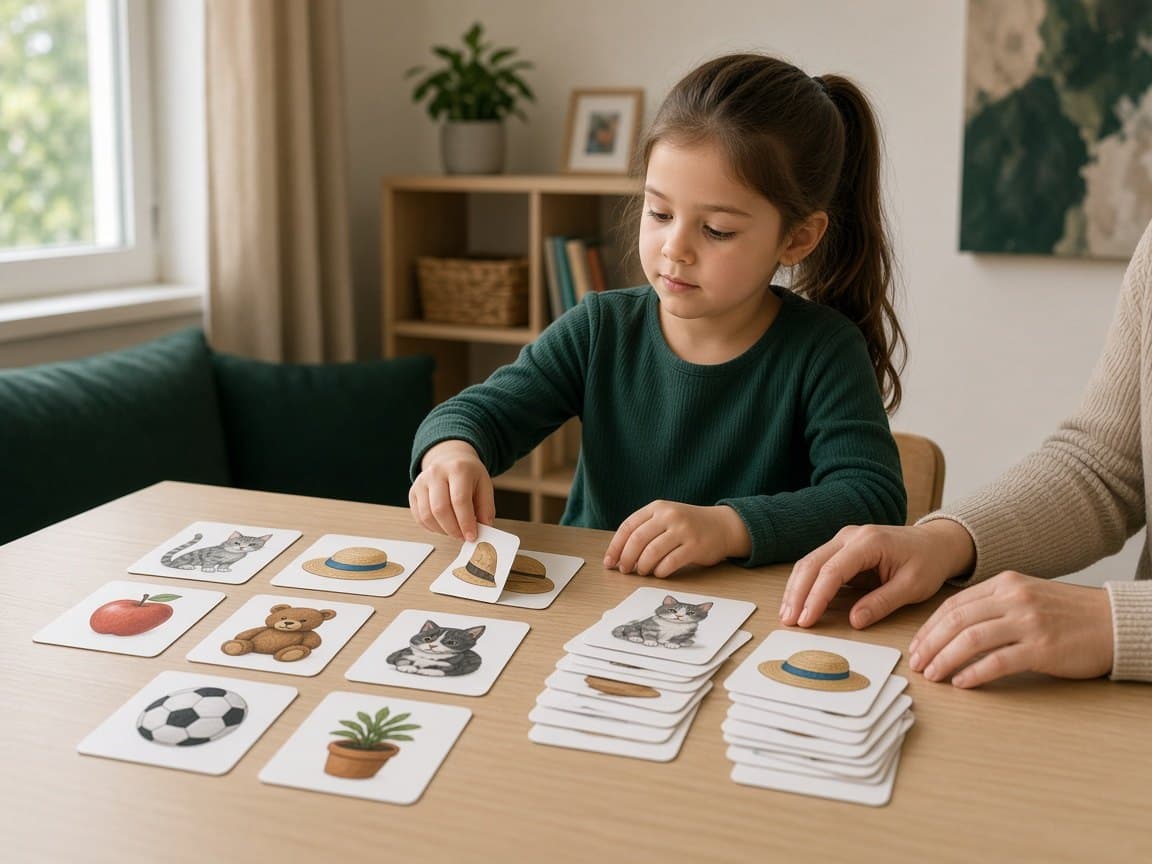
Pattern-based therapy should still feel like communication, not only like a spreadsheet of processes. Children need chances to use newly targeted patterns in play, classroom talk, and home routines while the cycle is live. If practice never leaves the picture-card table, intelligibility with unfamiliar listeners may stay flat even when drill looks better. Ask your clinician how this month's pattern will show up in real talking outside the clinic.
- Share current school speech goals if they exist
- Ask for a brief teacher cue sheet for this month's targets
- Note which peers or adults understand the child least
- Track whether frustration drops as intelligibility rises
Questions people ask before they call
Is a phonological disorder the same thing as a lisp?+
Usually no. A lisp is typically one sound or a small set of related distortions. A phonological disorder is a system of patterns across many sounds and word shapes. Diagnosing the difference matters so treatment is not the wrong protocol for a year. Evaluation is how Summit separates those lanes before goals are written. Highly unintelligible speech deserves pattern analysis before another year of single-sound drill. Strangers understanding less than half of utterances is a common reason to seek pattern-based care.
Why didn't traditional articulation therapy fix my child's speech?+
If errors were pattern-based, teaching one sound at a time can miss the system driving the simplifications. Intelligibility may stay low even while a single sound looks better in drill. A phonological analysis can redirect care toward cycles-style, minimal pairs, or other pattern approaches. Bring old goals to the free consult so the team can see what was tried. Old IEP goals that list only isolated sounds are a clue the system may never have been treated.
What does cycles-style therapy mean in plain language?+
It means targeting phonological patterns in planned rotations rather than demanding perfect mastery of one sound for months before moving on. The child practices a pattern intensively for a set period, then the clinician cycles to others as the plan requires. It is one pattern-based option, not a promise that every child follows an identical script. Your written plan should explain which patterns rotate first and how long each cycle is planned to run.
Could this actually be childhood apraxia instead?+
It could, which is why evaluation looks at consistency, vowels, groping, and imitation under load. Phonological disorders show rule-like patterns; apraxia shows motor planning breakdowns that often look inconsistent. Some children show mixed features. Mislabeling apraxia as a phonological issue, or the reverse, leads to the wrong intensity and cueing style. Mixed features are common; honesty about that mix is better than forcing one label forever. Vowel distortions and groping push the differential toward motor planning rather than patterns alone.
Should we worry about reading if speech is the main problem now?+
Yes, as a watch item. Phonological disorders and later reading difficulty often travel together. Speech intelligibility may be the first priority, but phonemic awareness and literacy language should enter the plan when indicated. Ask how Summit will monitor that risk rather than waiting for a third-grade crisis. Mark R. Plumley lists phonemic awareness among published interests when literacy handoff becomes relevant. Literacy monitoring can start as brief sound-awareness checks without waiting for a reading crisis.
Does every Summit clinician use PROMPT for phonological disorders?+
No. Diane Nilsson is PROMPT-trained, and PROMPT can be one tool within a plan. Pattern-based phonological therapy does not require one branded method for every child. Ask what approach fits your child's evaluation results. Method choice should follow the diagnosis, not a clinic-wide slogan. Diane's PROMPT training remains one tool some clinicians use, not the whole method for every phonological case. Ask how intelligibility will be sampled with unfamiliar listeners as patterns change.
How do we measure progress if the child still misses some sounds?+
Intelligibility with unfamiliar listeners, reduction of targeted patterns, and functional classroom communication are better north stars than perfection on every consonant. The plan should define what success looks like for the current cycle of goals. Reassessment adjusts targets as the system reorganizes. Classroom participation goals belong beside perfect practice words on a clinic list when the child still cannot be understood at school. Functional classroom words can influence target order inside an otherwise pattern-based plan.
Will my child become easier to understand before every sound is perfect?+
Yes, that is often the point of pattern-based care. Targeting processes that delete finals or simplify many words can lift intelligibility while some individual sounds still develop. Perfect phonetic inventories are not the only success metric. Ask your clinician what intelligibility change to expect for the current target set. Unfamiliar-listener checks keep progress honest when parents have learned to translate everything. Parents who translate everything may underestimate how hard the child is for new listeners.